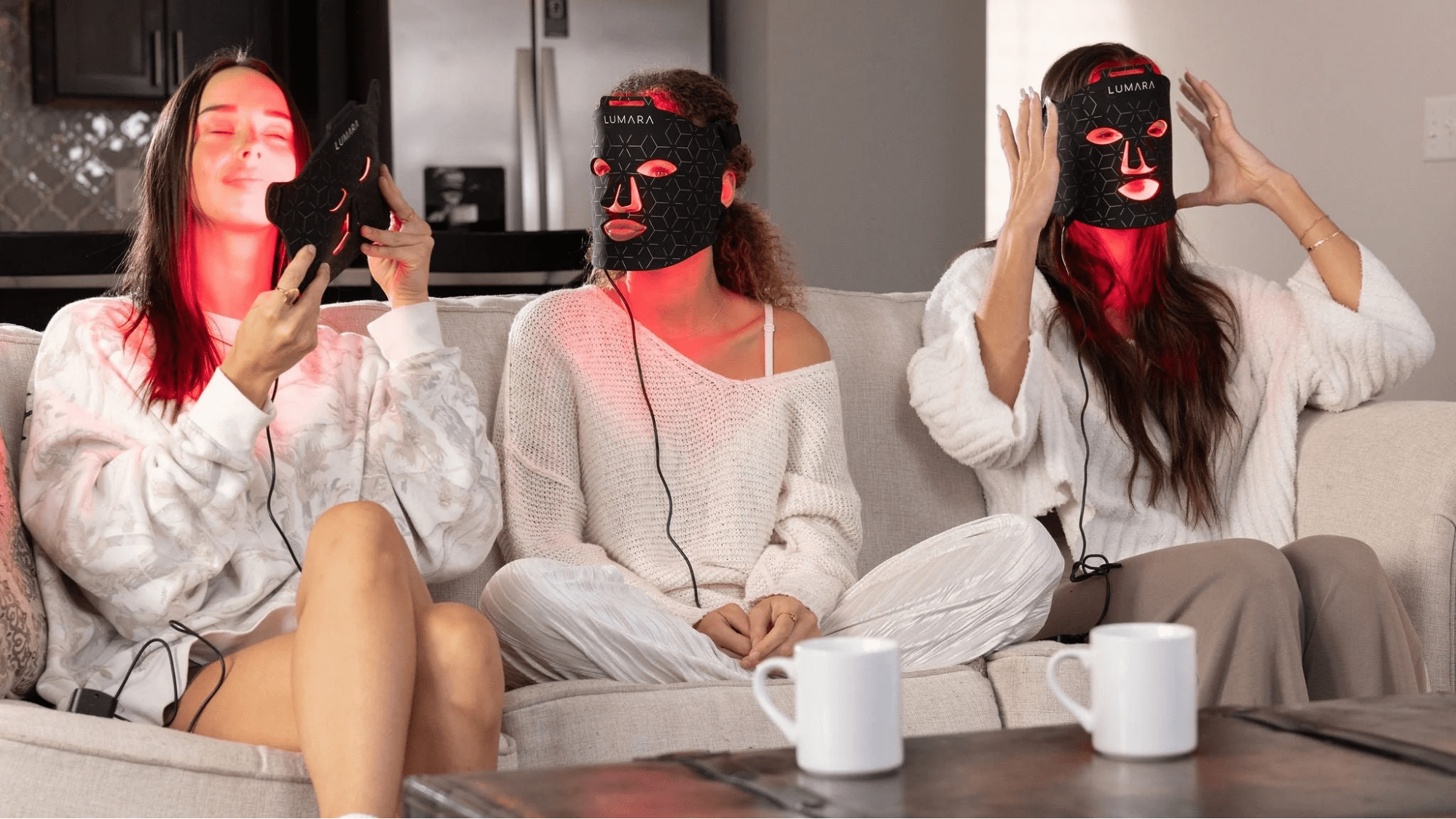
A uniform-distribution LED mask delivers the same energy dose across the entire face by using tight LED spacing, overlapping optics, and calibrated irradiance. Look for published wavelengths, time-to-dose information, and spacing data when choosing a mask.
Many commercial LED masks claim coverage but fail to publish irradiance values or spacing details, leaving gaps in performance. A study on LED arrays found light output dropping to only 38% at just 2 cm away, showing how uneven layouts can underdose large portions of skin.
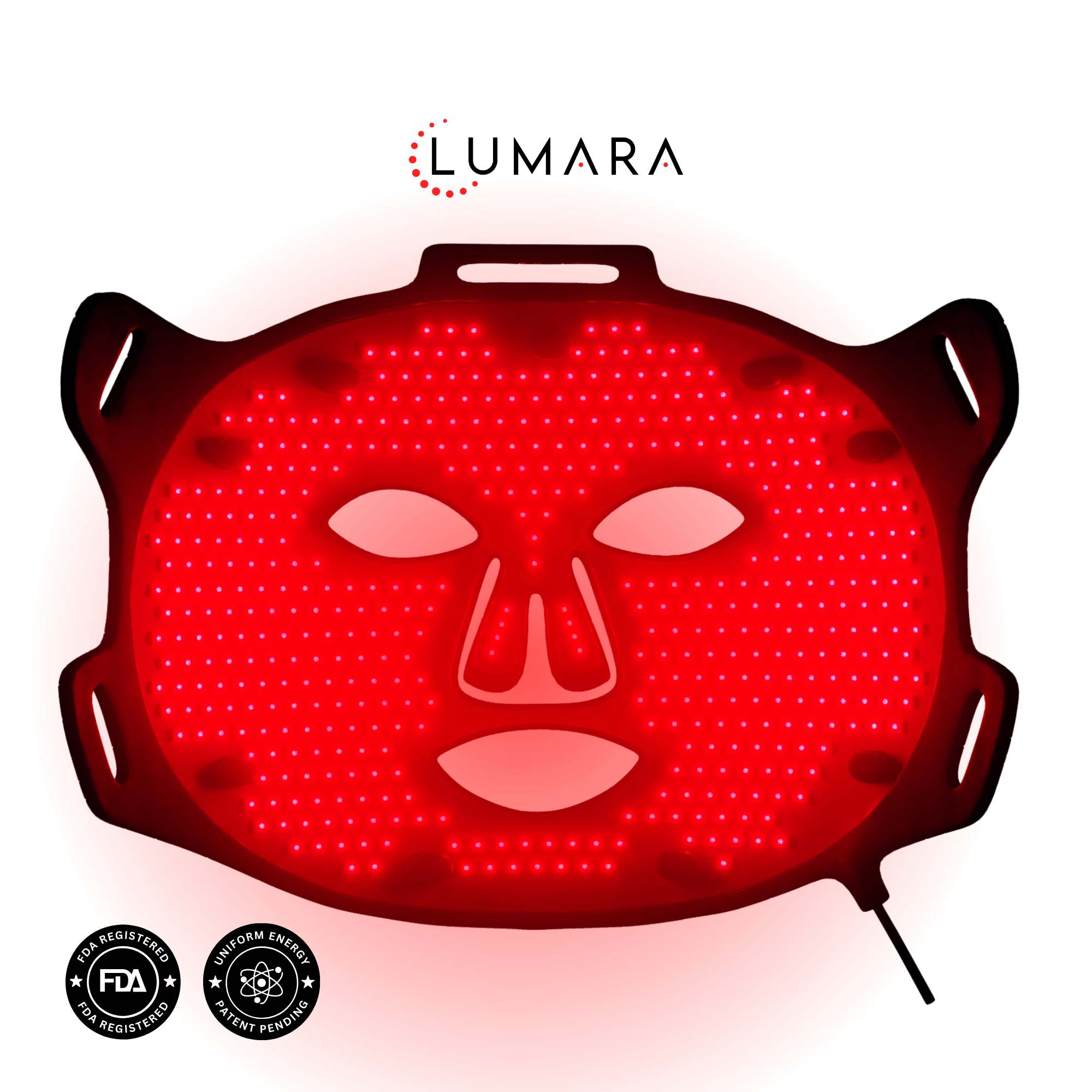
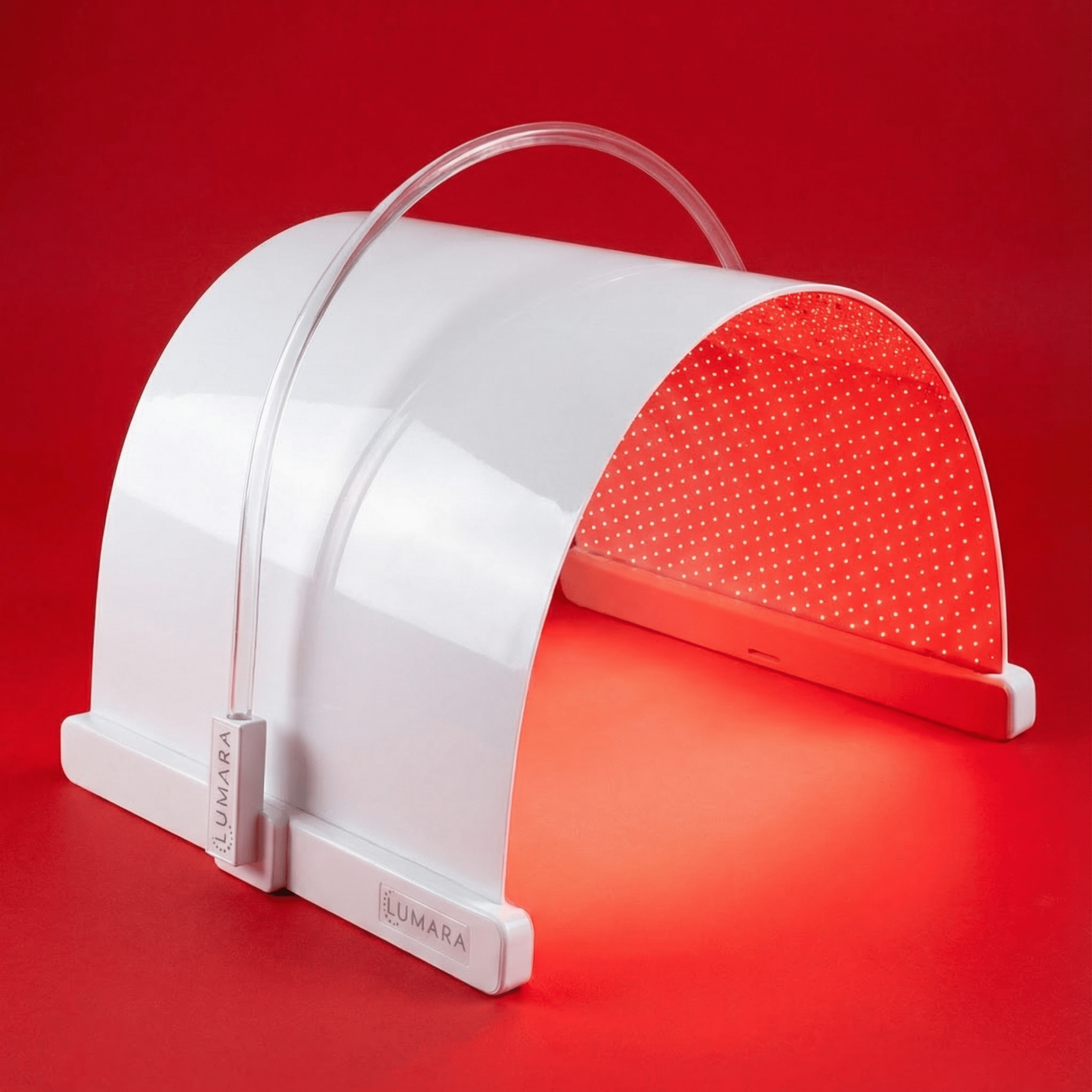
This is where engineering detail matters. Devices like the VISO LED Mask are built with dense LED placement at 660 nm to keep facial energy consistent. For professional-grade coverage, the Illuminate Red Panel uses 6 mm spacing to overlap beams and deliver 5 J/cm² in about five minutes.
If you want the deeper breakdown, what “uniform energy” really means, how spacing controls dose, and how to avoid gaps, keep reading.
What “uniform energy” means on skin
Uniform energy = consistent dose everywhere
Uniform energy means every square centimeter of skin receives the same therapeutic light dose, measured in J/cm². Without it, some areas are overstimulated while others are left untreated. That patchy effect slows collagen production and undermines results.
Why equal dose matters
Uneven layouts create “leopard spots”, patches of treated and untreated skin. Sparse LED spacing or poor optics make this common in lower-tier devices. When coverage is uniform, collagen stimulation and circulation improve evenly, producing visible skin tone balance and texture changes.
Quick field check
There’s a simple way to see if spacing works. Place a finger between two LEDs while the mask is running. If that strip of skin doesn’t glow, your face won’t either. It’s a fast indicator that the mask leaves gaps instead of delivering uniform energy.
Spacing and optics decide coverage

Overlap by design
The distance between LEDs determines whether beams overlap or leave gaps. Panels built with 6 mm spacing, like the Illuminate Red Panel, allow beams to blend, keeping energy consistent across the full treatment area.
Face geometry and distance
Flat mask shells often lift off the cheeks or jawline, reducing the delivered dose. Flexible builds and dense arrays, such as those used in the VISO LED Mask, maintain closer skin contact and deliver a steadier result.
Dose math you can verify
Time-to-dose examples
Dose is defined as energy delivered per area, measured in J/cm². The Illuminate Red Panel reaches 5 J/cm² in about five minutes, a benchmark that ensures treatment areas get a clinical dose in a short session.
Power-step timing
Treatment time scales with intensity. At full power, one session may take five minutes. Reducing to 80% requires about six minutes, while 60% stretches closer to eight minutes. Knowing these ratios helps users stay consistent without guesswork.
Home facial wavelength
The VISO LED Mask runs exclusively at 660 nm. This wavelength is widely studied for stimulating collagen and calming redness, making it ideal for everyday facial use without the heat load or eye strain associated with infrared.
Device choices by use case

Daily face care (home)
The VISO LED Mask combines 660 nm red light with over 400 LEDs. Its dense distribution prevents patchy coverage and maintains an even dose across the entire face.
Clinic-speed results (face + body)
The Illuminate Red Panel offers uniform output over large areas, delivering full coverage in minutes. Its engineered spacing avoids the steep energy falloff documented in Moseley’s analysis of LED arrays, positioning it as a calibrated option that solves uneven dosing.
Body recovery and deep tissue
Pads with multi-wavelength output at 635, 830, and 940 nm target muscle recovery and circulation. They are best suited for body treatments, with goggles added for infrared safety.
Glow With Lumara

Uniform energy is the difference between results you can count on and outcomes that leave you guessing. When a device delivers consistent light across the entire treatment area, skin responds with better tone, texture, and collagen activation. But that only happens when brands are transparent about wavelength, irradiance, and LED spacing.
Lumara devices are engineered with that clarity in mind. The VISO LED Mask makes clinical-quality facial care accessible at home. The Illuminate Red Panel scales that power for full-body treatment in minutes. And for deeper recovery needs, our flexible pad delivers targeted infrared energy right where you need it.
Explore devices built for uniform energy:
- VISO LED Mask – Everyday facial care with 660nm precision
- Illuminate Red Panel – Full-body clinical output with 6mm LED spacing
- Lumara Pad – Deep-tissue and recovery treatments with multi-wavelength coverage
Consistent light. Predictable results. No compromises.
FAQ
Do neck and jaw areas get the same dose?
Cheeks and jawlines are often left underdosed when masks lift away from the skin. Devices with dense spacing and flexible fit, such as the VISO LED Mask, keep coverage consistent across facial contours.
Can I stack wavelengths on the face?
Red at 660 nm provides balanced results for facial routines. The VISO LED Mask is designed specifically for this range. Other wavelengths, like infrared, are best handled with panels or pads intended for body treatment.
How do I time shorter or longer sessions?
Treatment time scales directly with power level. If five minutes at full output delivers 5 J/cm², then reducing output by half requires doubling the time to reach the same total dose.
Why is eye protection sometimes required?
Higher irradiance levels or infrared sessions can stress the eyes. Pairing those treatments with Treatment Goggles ensures safe delivery without reducing therapeutic benefit.

Share:
How to Use a Red Light Therapy Mask: Step-by-Step Guide
How Often You Should Use An LED Mask For Acne